
Students from our most advanced violin, viola and cello groups had the honor of being special guests at the sold out Takács Quartet concert on January 12. In addition to experiencing the quartet’s incredible performance of an all-Beethoven program, we had the privilege of observing their pre-concert warm up, asking questions about their preparations and meeting them after the concert. We are very grateful to the Takács Quartet for this unique educational opportunity and for their inspiring performance! 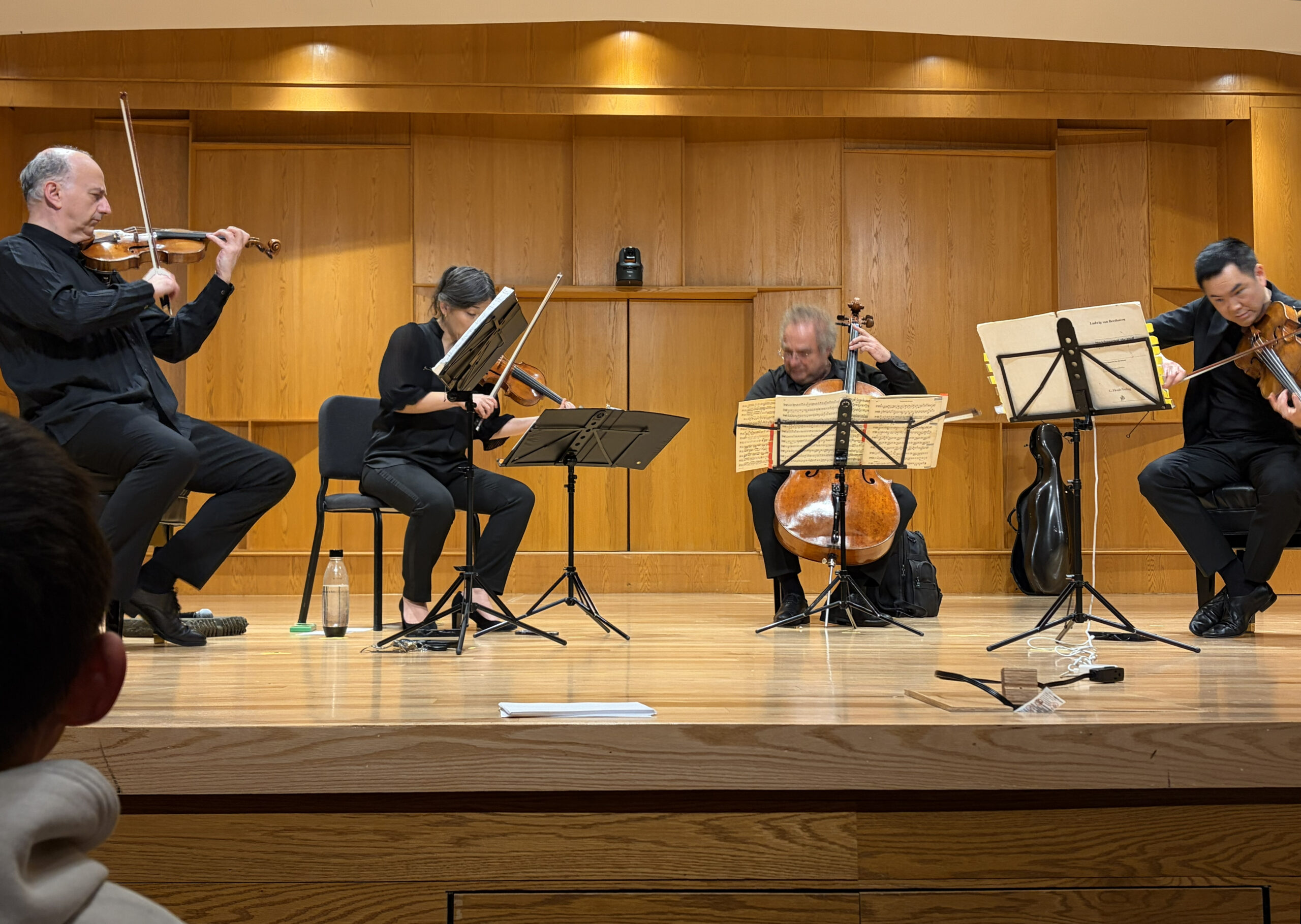
The members of the Takacs quartet were not only generous with the time they spent with students on the evening of the concert, they took extra time to follow up with thoughtful written responses to the student’s questions. Here are a few of their responses which contain many nuggets of wisdom for all of our students.
Q: What would be some advice you would tell your younger self regarding your musical journey?
• Edward Dusinberre (Violin): I would tell my younger self lots of things. 😊 One specific: Be patient with technically difficult things – do more slow practice! One general: Be more curious about all sorts of music. If you find something that really excites you, run with that idea – find friends to make it happen. Often musical careers develop in unexpected ways but it’s the quality of interactions with other people that make the biggest difference. There’s the work in the practice room of course but appreciate music as a means to get to know and communicate with other people, a way to learn about people with very different backgrounds and life experiences from your own. And finally I would tell myself not to be so discouraged by setbacks – to deal in a more levelheaded way with disappointments – then they can help shape you in more positive ways than successes, although of course they are nice too!
Q: After playing together for so long, do you notice you unconsciously adjust to the others intonation, or does it require constant, active listening?
• Harumi Rhodes (Violin): Yes, and Yes! It is true, we are constantly doing the daily nitty-gritty work – including rehearsing slowly, actively listening, playing difficult passages together in a gentler dynamic, tuning chords from the bottom up, tweaking our balance to match the passing of lines, etc. When we work this way, we try to train our ears (and motor skills) to be nimble so we know 1) what our role is at any given time AND 2) also to be flexible for any micro-tuning adjustments that might happen in the moment. This kind of flexibility is especially important to me in my role as an inner voice: along with Richard, I am often providing the connecting material (sonic and rhythmic) that binds together the quartet and keeps it supported from the inside out.
Q: Where are you mainly looking while playing in a quartet?
• Richard O’Neill (Viola): This may sound strange, but I see through listening…in some ways we all do in the quartet. When I play solo concerts I memorize my music so I am used to not necessarily looking at a focal point when I am playing.
Q: I feel like the group synergy plays a major role in expressing the emotion of each piece. A lot of your movements seem very coordinated, but are these movements planned or natural?
• András Fejér (Cello): To prepare a movement, we try to find out what the composer might have in mind. Then we try to map out the characters as if we were in an opera or theater stage / mixing tone colors / finding appropriate dynamics. All these actions need to be realized with the left and right hands, and our torso needs to help them coordinate. Once all the details are ironed out, we all need to play with the same intensity and involvement, hence our bodies move in similar ways.